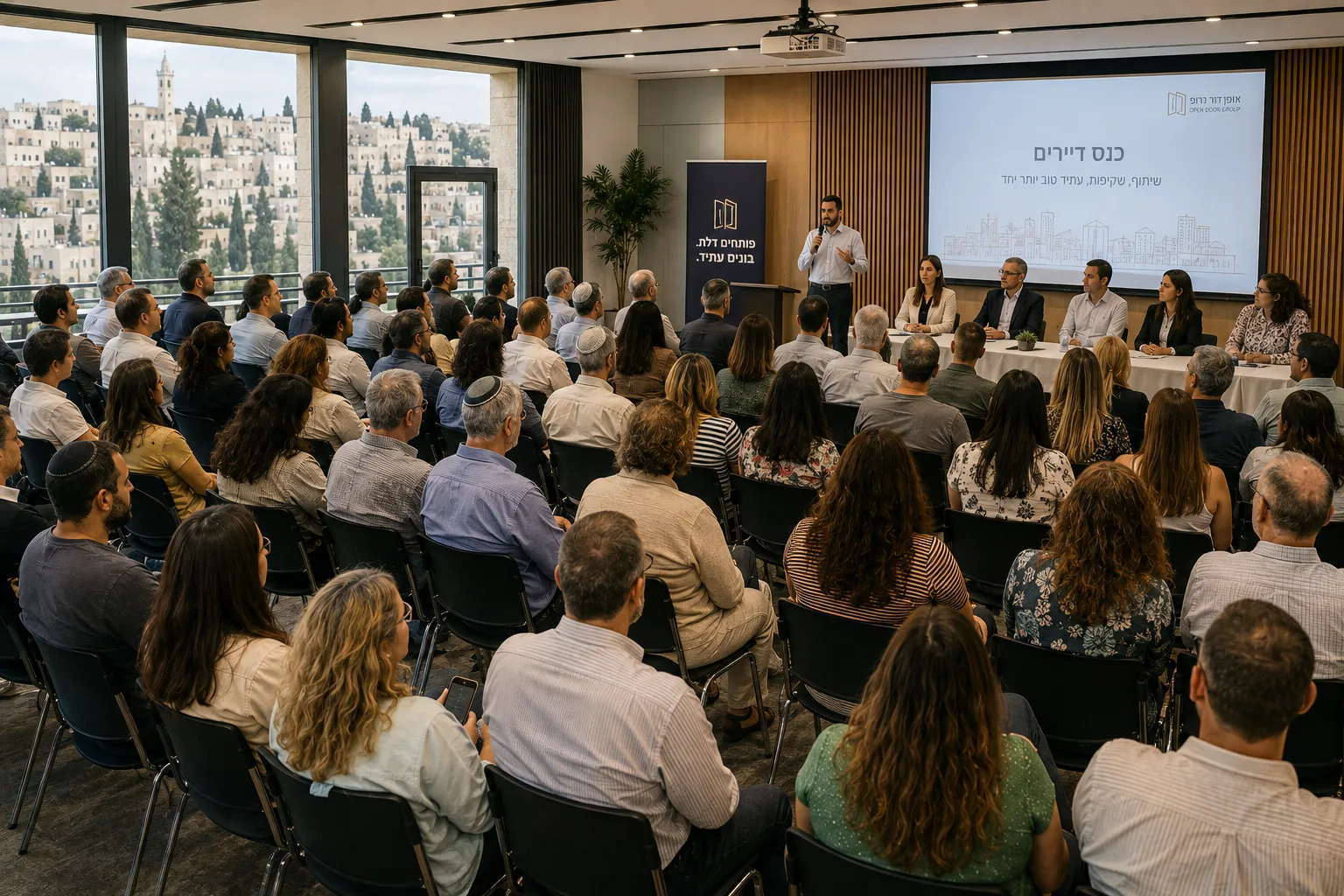
Eight stages, over several years.
This is the general shape of the process, and what is asked of owners at each stage.
Projects differ in planning route, ownership structure, complexity and timing. Some stages run in parallel and some repeat. What follows is the general shape, not a fixed sequence or a commitment to dates.
First review

A look at the complex and at initial feasibility, before anything is asked of the owners.
What is asked of you: The building address and a contact. That is all at this stage.
Meeting the owners

A meeting with the residents, an explanation of the process, and answers to questions. Mostly we listen: every building has its own history, and it is worth knowing before anything starts.
What is asked of you: Come to the meeting, and bring the questions that actually worry you.
Organising and forming a representation

Choosing a representation from among the owners, to centralise communication and bring matters to all the owners for decision.
What is asked of you: Choose representatives from among the residents, and agree how you will work with them.
Gathering information and professional review

Appointing the owners’ professionals and gathering what is needed to decide: planning status, ownership position, and the reviews relevant to the complex.
What is asked of you: Choose the professionals, and provide ownership documents where needed.
Setting out needs and principles

What matters to these owners in this project. Not every complex wants the same thing, and the principles are better settled before anyone outside is involved.
What is asked of you: Take part in the discussion and say what you think. Disagreement is useful information too.
Examining alternatives and developers
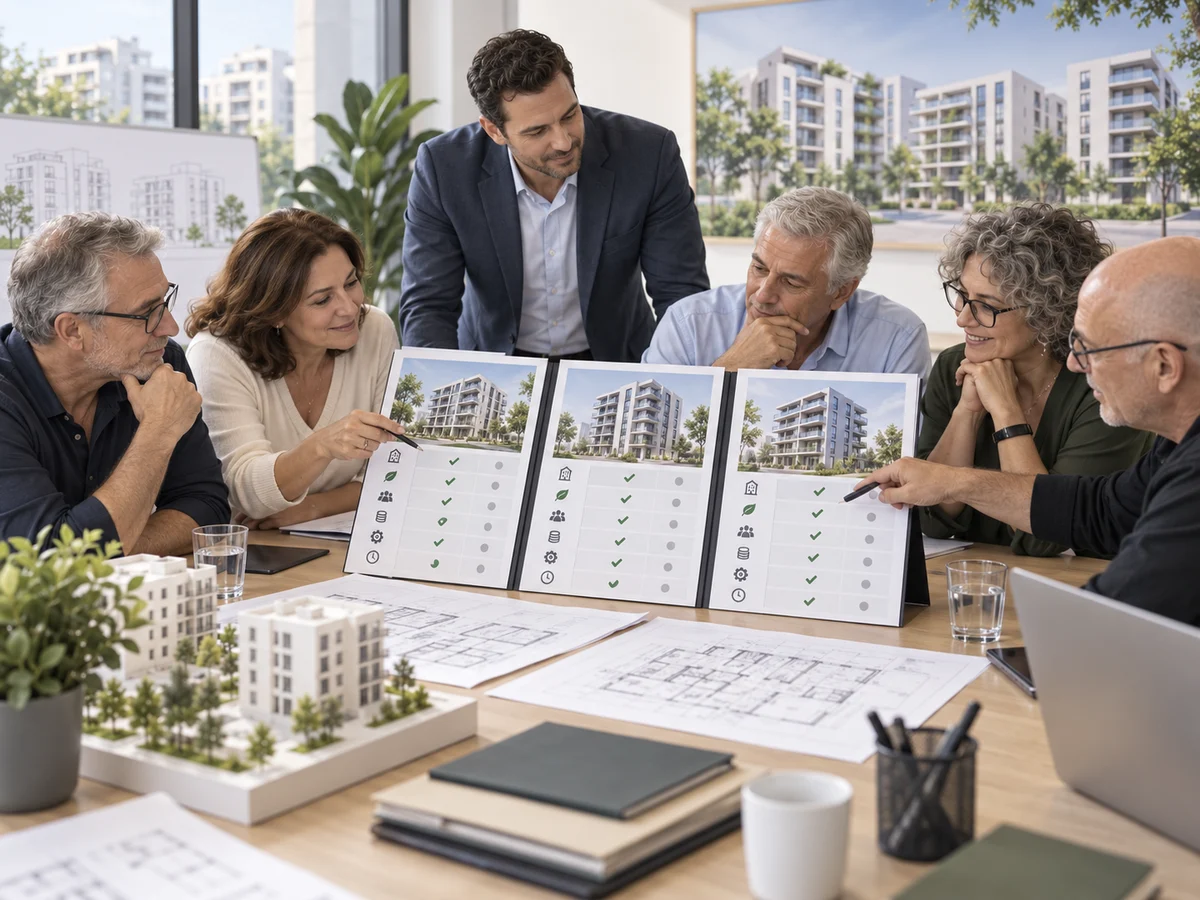
Approaching relevant parties, receiving proposals, and comparing them against the same parameters. The comparison is documented so it can be revisited.
What is asked of you: Decide. Choosing between the alternatives is the owners’ call, not ours.
Advancing the process
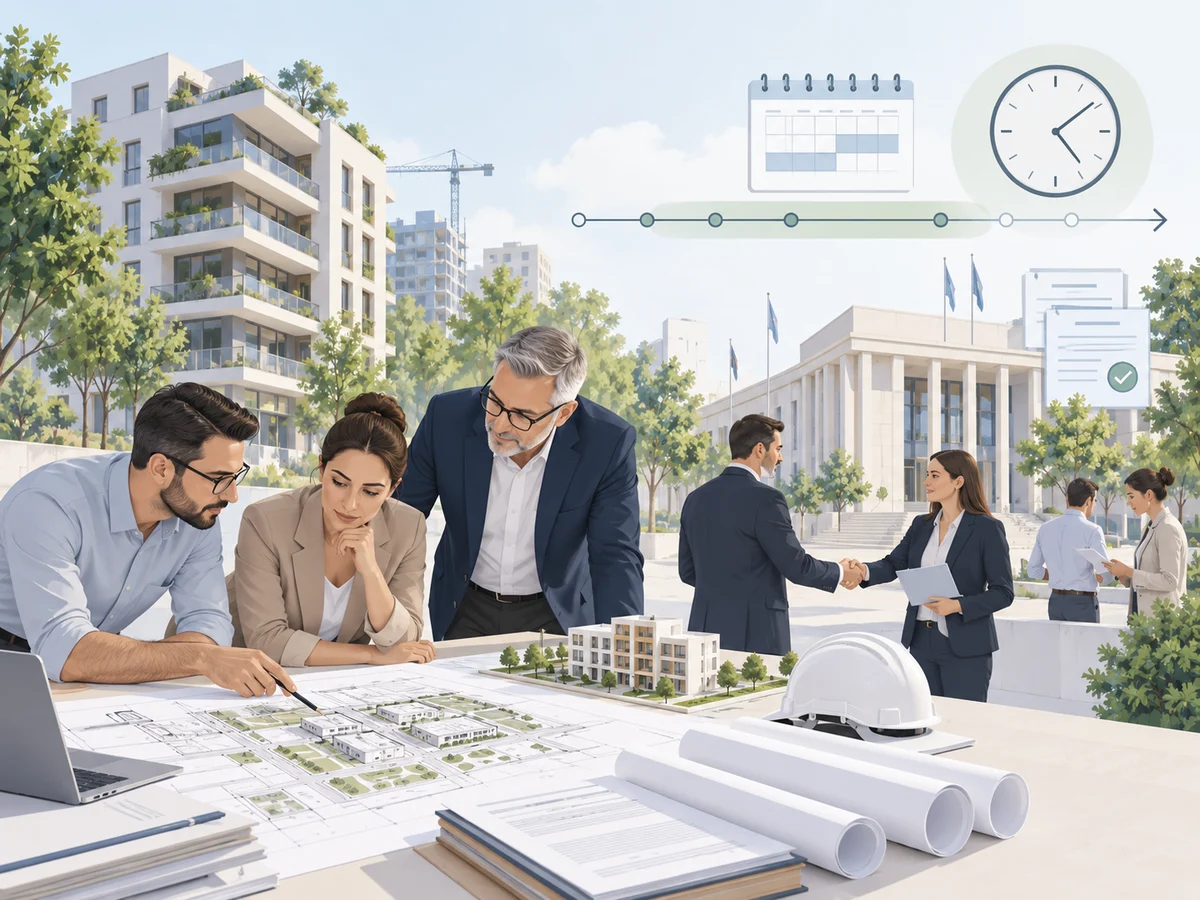
Agreements, design, and progress with the municipality and the planning institutions. Usually the longest stretch, and dependent on things no party controls.
Support, updates and transparency throughout

The process does not end at signature. Updates, records and access to information continue through to completion, including in the stretches when there is nothing dramatic to report.
Transparency in practice
Knowing where the project stands, and what comes next
In the personal area, owners follow the project’s progress, documents, updates and meetings without waiting for a phone call. The view below demonstrates the structure and does not describe an existing project.
- Completed
- Stages that finished, with the documentation they produced.
- Current stage
- What is happening now, and what is asked of owners at this stage.
- Next
- The next decision point, so nobody is taken by surprise.
Owner organisation
Representation formed
Examining and selecting a developer
Current stage
Developer selected
Planning